What Happens During a Septic Inspection (And Why Most Homeowners Are Surprised by What Turns Up)
You scheduled the inspection because your real estate agent told you to, or because something in the yard smelled off after a heavy rain. You figured someone would lift a lid, look around for a few minutes, and hand you a clean report. What actually happens is a lot more involved than that — and what turns up on these inspections surprises homeowners almost every time.
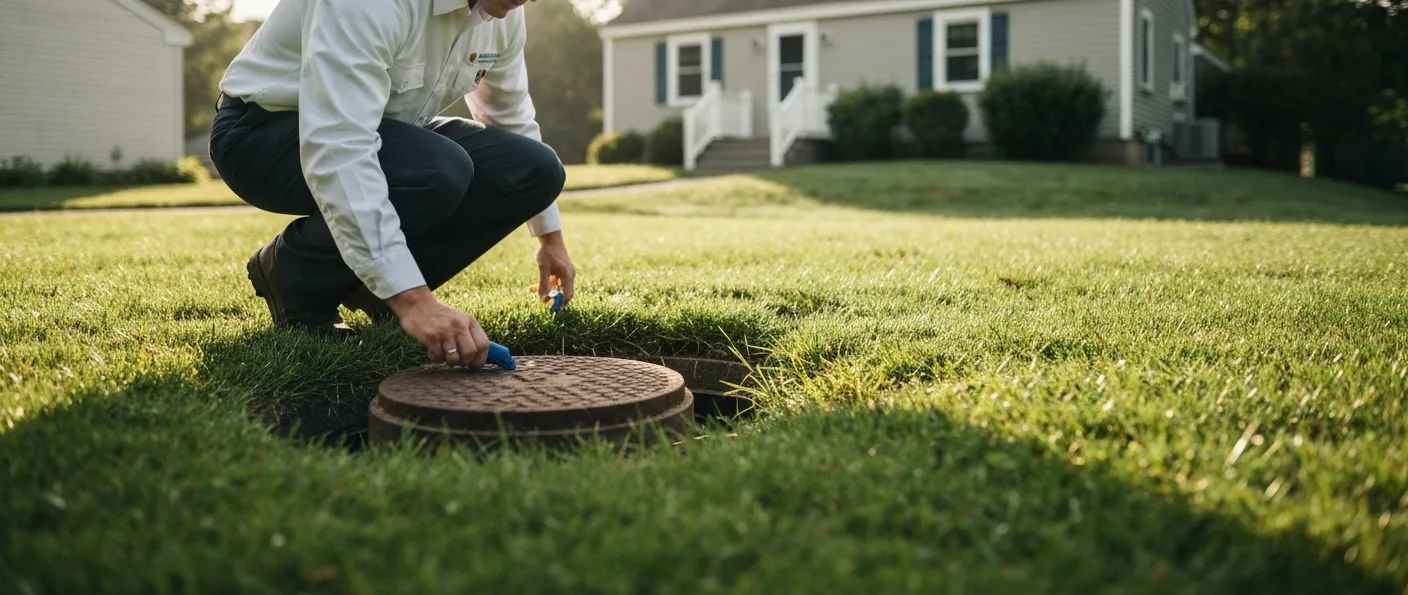
A septic inspection is not a visual once-over. A thorough Title V inspection in Massachusetts involves locating components, measuring liquid levels, running water through the system, observing how it drains, and checking whether each part of the system performs the way it was designed to. The findings shape whether a property can legally transfer, and they often reveal issues that have been building quietly for years.
What Actually Gets Inspected and in What Order
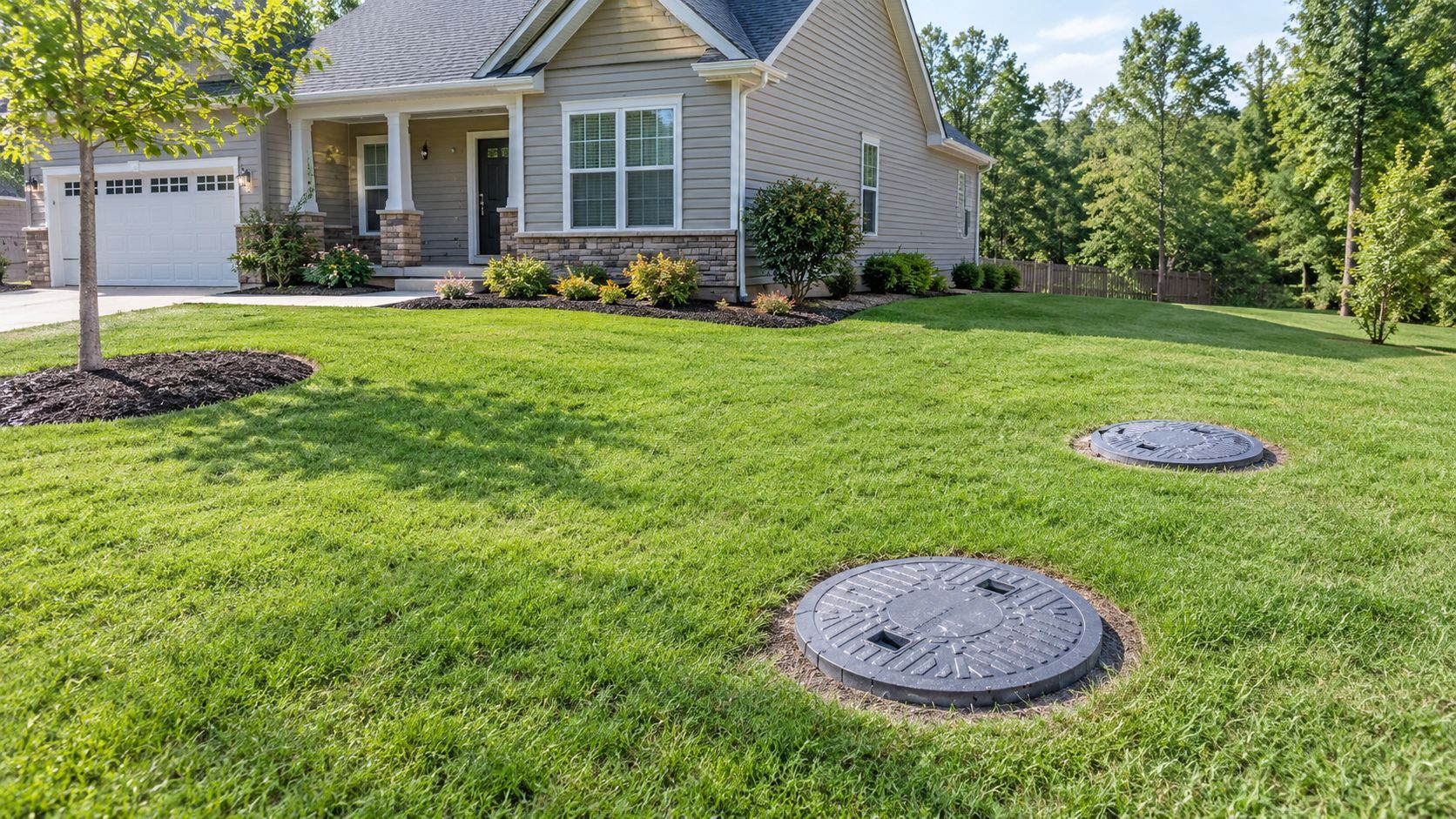
The inspection does not start at the tank. It starts with the record of what was originally installed and permitted. Before we set foot in the yard, we pull the as-built drawings from the board of health when they are available. These tell us where the tank, distribution box, and leach field are supposed to be, how large they are, and when they were installed. When those records do not match what we find in the ground, that discrepancy is itself a finding.
Once on site, the tank is located and pumped or inspected for liquid depth. We measure the scum layer at the top and the sludge layer at the bottom. When combined, those layers should not exceed about 30 percent of the tank's liquid volume. Many homeowners have never had their tank pumped in 10 or 15 years. By the time we open the lid, the sludge layer alone has consumed most of the working capacity of the tank, and solids have been pushing downstream into the distribution box and leach field for probably two or three years already.
The distribution box, which splits flow evenly across the leach field trenches, gets checked for cracks, solid accumulation, and whether the outlets are level. An unlevel d-box sends all the flow to one or two trenches instead of spreading it across all of them. That single trench gets overloaded while the others sit dry. Homeowners almost never know this is happening because everything appears normal from the surface.
The leach field itself gets evaluated through a hydraulic load test. Water is run through the system at a volume that simulates typical household use. We observe how quickly the system accepts that water and whether it surfaces, backs up, or drains at an appropriate rate. Saturated soil, roots in the trenches, and biomat buildup at the trench bottom all slow that process down.
What Most Homeowners Do Not Expect to Find
The findings that consistently catch homeowners off guard are rarely dramatic failures. The tank has not collapsed. The yard is not flooded. The toilets still flush. But the system is operating well below where it needs to be, and the problems have been accumulating long enough that they are going to require real work to address.
Cracked Or Deteriorated Tanks
Concrete tanks installed before 1980 in this region have been exposed to decades of soil movement, freeze-thaw cycles, and hydrogen sulfide gas from within. The inlet and outlet baffles, which are critical for keeping solids in the tank and out of the leach field, are missing or completely deteriorated in a high percentage of older systems we inspect. Replacing a baffle costs a few hundred dollars. Not replacing it eventually costs a leach field.
D-Box Issues
A cracked distribution box that has settled out of level is one of the most common findings on inspections in eastern Massachusetts. Soils in coastal communities like Rowley shift with frost and with wet-dry cycles, and a d-box that was perfectly level at installation 20 years ago may be tipped two inches now. That two-inch difference means all the flow is channeling to the low side.
Reduced Leach Field Capacity
The biomat that forms naturally at the bottom of leach trenches is supposed to be thin enough that water still percolates through. When a system has been overloaded or underperforming for years, that mat becomes thick and nearly impermeable. The system does not fail overnight. It slows down gradually until one heavy rain event or a week of high water use pushes it over the edge.
Unpermitted Additions
We regularly find systems that are undersized for the current structure because a bedroom was added, a garage was converted, or a second bathroom was put in after the original system was designed. A system designed for a three-bedroom house cannot legally support a five-bedroom house under Title V, and it typically cannot handle the load in practice either.
Why Massachusetts Inspections Surface More Issues Than Homeowners Expect
The short answer is that this state has one of the more thorough inspection standards in the country, and that thoroughness exposes things that would pass unnoticed elsewhere. But the regional conditions also make failures more likely and more consequential.
The coastal plain soils in communities like Rowley, Newburyport, Ipswich, and the surrounding area are variable. You can have sandy loam that drains well in one part of a lot and clay-heavy soil 30 feet away that holds water for days after a storm. A leach field installed in the wrong zone of that lot has been fighting the soil since day one.
The water table in low-lying areas near the Parker River estuary and the salt marshes rises significantly in spring and after major storms. Title V requires a minimum separation distance between the bottom of the leach field and the seasonal high water table. When that separation gets compromised by a rising water table or a system that was originally installed too shallow, the leach field sits in saturated soil for weeks at a time. Saturated soil cannot accept effluent. The system backs up, and the homeowner notices it at the worst possible time.
Frost depth in northeastern Massachusetts averages 36 to 48 inches, and older systems were not always installed with adequate cover over pipes and tanks. We find cracked pipe joints and damaged inlet risers on inspections that trace directly back to frost heave over multiple winters.
What Happens After the Inspection
If the system passes, you receive a Certificate of Compliance and the property can transfer. If it fails, the seller is responsible for bringing the system into compliance before the sale closes, or the parties negotiate a different arrangement. If conditions are found, those conditions are recorded, and depending on their nature, a timeline for repair is set.
The findings also give you a maintenance roadmap regardless of pass or fail status. A system that passes today with a scum layer at 28 percent needs to be pumped within 12 months. A distribution box that is level but cracked should be replaced before the next wet season. Knowing where the system stands gives you the ability to make decisions rather than react to an emergency at the worst possible time.
How to Keep Your System Out of the Danger Zone
Pump your tank on a regular schedule. For a household of four using a 1,000-gallon tank, every three years is appropriate under typical use. Do not use the kitchen garbage disposal heavily. Every load of food waste that goes down that drain adds organic solids that your tank was not sized to handle.
Keep heavy vehicles and equipment off the leach field. Compacted soil over leach trenches reduces oxygen in the gravel bed and slows the biological processes that treat the effluent. One pass from a delivery truck over wet ground can compress the soil enough to affect drainage.
Direct roof drains, sump pump discharge, and surface runoff away from the leach field. Saturated soil in and around the trenches is the fastest way to shorten a leach field's working life. In the low-lying areas of northeastern Massachusetts where the water table is already elevated in spring, adding surface water on top of a leach field can push a marginal system into failure within a single wet season.
Get the tank pumped before an inspection, not because it hides problems, but because it gives the inspector a clear view of the tank condition, the baffles, and the liquid depth after pumping.
Expert Septic Inspections Backed by Local Field Knowledge
A septic inspection tells you exactly where a system stands, not just whether it passes or fails, but how much life is left in it and what it needs to keep performing. In northeastern Massachusetts, where seasonal water table changes and coastal soils create conditions that accelerate system wear, knowing that information before a sale or before a system fails gives you real options.
Down East Title V Inspections
serves Rowley, Massachusetts, and the surrounding communities throughout Essex County. To schedule an inspection or get answers about your system, reach out directly, and we will walk through what to expect.
Frequently Asked Questions
How long does a Title V septic inspection take?
A complete Title V inspection typically runs two to four hours depending on system size, component accessibility, and whether the tank was recently pumped. We pull water through the system during the inspection, so the process cannot be rushed without affecting the accuracy of the hydraulic load test.
What are the most common reasons a system fails a Title V inspection?
The most common failure causes we see are inadequate separation between the leach field and the seasonal high water table, a tank that is not watertight, a failed hydraulic load test, and missing or broken components like inlet baffles and cracked distribution boxes.
Can a septic system pass inspection and still need immediate maintenance?
A passing inspection means the system met the standards on that specific day. A system can pass with an aging tank due for pumping within the year or a leach field showing early reduced capacity. The inspection report notes these conditions and explains what they mean going forward.
Does heavy rainfall affect whether a system passes or fails?
Heavy rain raises the water table and can directly affect the hydraulic assessment of the leach field. In northeastern Massachusetts, spring inspections on properties near wetlands or tidal areas sometimes need careful timing, and findings may note elevated water table conditions not present during drier months.
What should I do if my inspection reveals a failed leach field?
A failed leach field means the system cannot accept effluent at the required rate. Repair options depend on lot size, soil conditions, and available separation distances. A soil evaluator will assess the site and determine whether a conventional system or an alternative design is feasible before the property transfers.