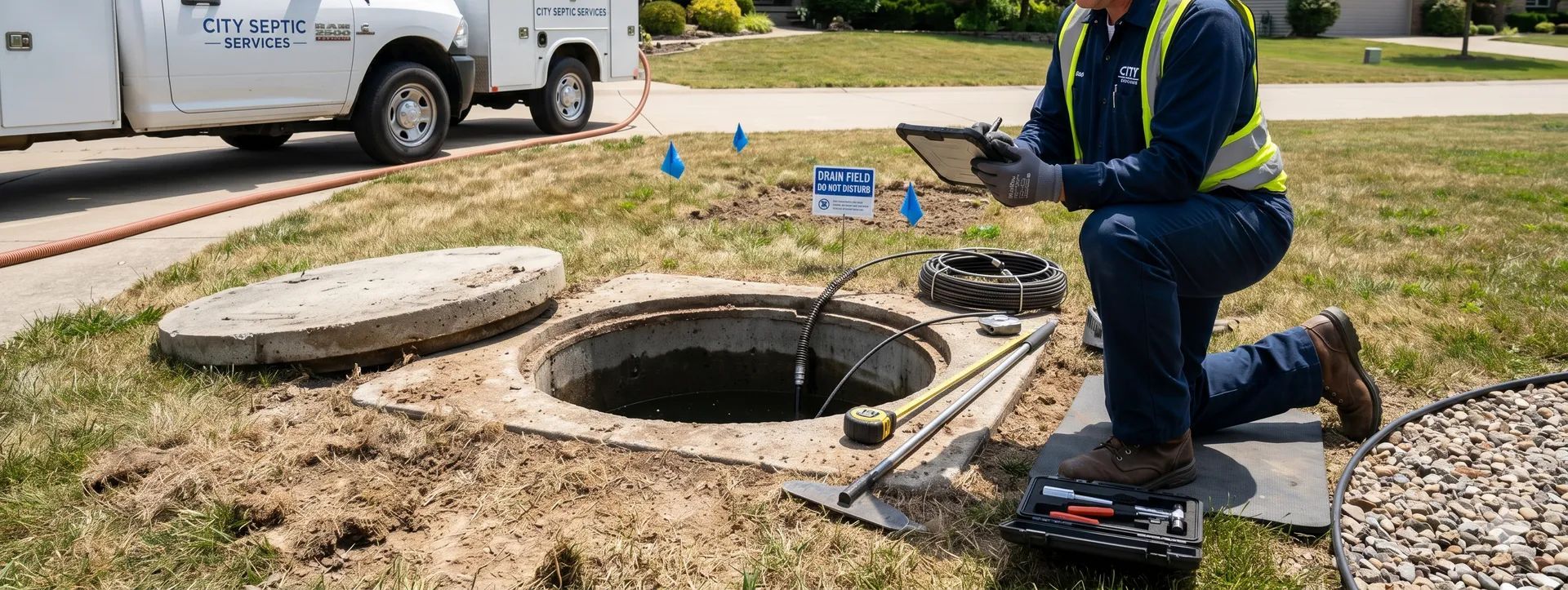
Buying a Home With a Septic System? Here's What to Check First
Quick Answer: Before you make an offer on a home with a septic system, ask the seller for the most recent Title 5 inspection report, pumping receipts, and any permits tied to the system's age and size. In Massachusetts, a valid inspection generally has to be completed within two years of the sale and comes from a MassDEP-approved inspector, and you're entitled to a copy of that report even if the seller arranged it. The report lands in one of three categories: pass, conditional pass, or fail. A conditional pass means one fixable part needs work, while a fail usually points to the soil absorption area or an aging cesspool. None of it guarantees future performance, so treat the report as a snapshot of the system's condition on the day it was tested, not a warranty.
You've found the house. The kitchen works, the yard has good light, and the price fits. Then somewhere in the listing or the disclosure paperwork, you see it: septic system.
For buyers used to municipal sewer towns, those two words raise more questions than the roof or the furnace ever do.
It shouldn't derail the purchase. A septic system that's been inspected, documented, and reasonably maintained can serve a home just as reliably as a sewer connection, and across the North Shore, from older farmhouses in Boxford to coastal properties in Essex and Ipswich, private systems are simply how most homes handle wastewater. What matters is knowing what to ask for, what the inspection actually tells you, and where the gaps in a seller's paperwork might leave you exposed after closing.
A cracked distribution box that has settled out of level is one of the most common findings on inspections in eastern Massachusetts. Soils in coastal communities like Rowley shift with frost and with wet-dry cycles, and a d-box that was perfectly level at installation 20 years ago may be tipped two inches now. That two-inch difference means all the flow is channeling to the low side.
D-Box Issues
What a Septic System Actually Does
A septic system treats wastewater on-site instead of sending it to a municipal plant. Water leaves the house through one main line into a buried tank, where solids settle to the bottom as sludge and fats and oils rise to the top as scum. The clarified liquid in between, called effluent, moves out through an outlet baffle into a drainfield, where perforated pipes release it slowly into the soil. From there, natural filtering in the ground removes most of the remaining bacteria and contaminants before the water rejoins the groundwater table, according to the EPA.
Two things fail this process most often: a tank that lets solids escape into the drainfield, and a drainfield that's saturated or sitting too close to groundwater to filter properly. Everything an inspector checks traces back to one of those two failure points, which is worth keeping in mind once you start reading an actual report.
What to Request Before You Even Make an Offer
Don't wait until you're under contract to start asking questions. A seller who's owned the home for years should be able to hand over a stack of paperwork, and what's missing from that stack tells you almost as much as what's there.
A recent inspection report
If the system was inspected within the past two years for a prior transaction, refinance, or voluntary check, that report gives you a real baseline. Ask specifically whether it was a compliance inspection tied to a sale or a routine assessment, since the two carry different weight.
Pumping and service records
A system pumped on a regular schedule, and documented as such, tells you the owner treated it as more than an afterthought. Under Massachusetts rules, records showing annual pumping can actually extend how long an inspection stays valid, which matters for your own timeline after you move in.
System age, size, and permits
Ask when the system was installed and whether it was sized for the home's current bedroom count. A tank designed for a three-bedroom house that's since been expanded to five bedrooms is a mismatch worth knowing about before you sign anything.
A site plan or as-built drawing
Knowing exactly where the tank, distribution box, and drainfield sit protects you later, when you're planning a patio, a shed, or new landscaping that could otherwise land right on top of buried components.
TIP: Ask your real estate agent to request septic paperwork in writing, as part of the seller disclosure packet, rather than relying on a verbal answer during a showing. A written record protects you if something the seller told you turns out not to match what the inspection later reveals.
How Massachusetts's Title 5 Process Fits Into Your Purchase
Massachusetts regulates septic systems under the state's Environmental Code, generally referred to as Title 5. For most residential sales, the system has to be inspected within two years before the property changes hands, and only an inspector approved by MassDEP can produce a report that counts toward that requirement. Reports from anyone else simply aren't valid for the transaction, no matter how thorough the visit was.
You're entitled to a copy of that inspection report as the buyer, even though the seller is usually the one who arranges and pays for it. Confirm early who's handling that step. Massachusetts allows the buyer and seller to shift that responsibility between themselves in writing, as long as the inspection still happens on time. If weather or frozen ground makes an on-time inspection impossible, the process allows the evaluation to happen up to six months after closing instead, provided the seller notifies you of that in writing beforehand. On coastal North Shore lots, where a wet fall or a hard freeze can make a proper site evaluation difficult, that allowance comes up more often than buyers expect.
Some transfers, like sales between spouses, parents and children, or full siblings, don't trigger the inspection requirement at all. Those exemptions are specific and don't typically apply to an arm's-length purchase between unrelated parties, but it's a detail worth understanding if your transaction has any unusual structure to it, such as a trust or an estate sale. Your closing attorney or the local board of health can confirm how your specific situation is classified.
Reading the Report: Pass, Conditional Pass, or Fail
Once you have the report in hand, the outcome falls into one of three categories, and the middle one is the one buyers misunderstand most.
A passing system meets the standard as of the inspection date, full stop. A conditional pass means one specific, repairable component needs attention, things like a corroding metal tank, a cracked tank, a broken or obstructed pipe, or an uneven distribution box. Once that particular fix is completed and the local board of health confirms it, the system moves to a full pass. This is often the outcome that gives buyers room to negotiate a repair or a credit before closing, rather than walking away entirely.
A failed system is a different situation. Soil absorption areas and cesspools can't be patched under a conditional pass the way a tank or a pipe can, so a failure there usually points toward a larger repair or a full system upgrade rather than a quick fix. If you're buying a home with a failed system, that's the point where you and your agent need to decide whether the seller handles the upgrade before closing, whether funds get held in escrow for after closing, or whether the deal doesn't move forward at all. Buyers who skim past a conditional pass without reading what it actually requires are usually the ones caught off guard at the closing table.
WARNING: A passing or conditionally passing report only reflects the system's condition on the day it was tested. It doesn't promise the system will keep performing at that level, particularly if your household is larger than the sellers', or if you're planning an addition that increases water use. Budget some attention toward how your actual usage compares to what the system was evaluated under.
What North Shore Buyers Run Into More Than Most
Septic due diligence looks a little different depending on where you're buying. Older homes across Essex County, particularly in towns like Rowley, Newburyport, and Topsfield, sometimes still rely on cesspools rather than a conventional tank-and-drainfield setup. Cesspools get evaluated against a separate set of standards, largely centered on their distance from groundwater, wetlands, and nearby wells, and age alone doesn't automatically mean a cesspool will fail.
Coastal and low-lying lots add another layer. Seasonal high groundwater sits closer to the surface in parts of Ipswich, Essex, and Hamilton than it does further inland, and a drainfield needs a certain depth of unsaturated soil above that water table to filter wastewater properly. A system built decades ago, before current setback standards existed, can sit closer to that line than a new build ever would. None of that means a home is a bad buy. But it does mean the inspection carries a little more weight here than it would on dry, well-draining inland soil.
Living With the System After You Close
Once you own the home, the system becomes your responsibility, and a little routine attention keeps small issues from becoming expensive surprises. Most residential systems benefit from a professional inspection every one to three years and pumping every three to five, according to EPA guidance, though your actual interval depends on household size and daily water use. Keep whatever pumping receipts and inspection records the previous owner passed along, and add to that file every time work gets done. That paperwork becomes valuable again the day you decide to sell.
Pay attention, too, to what you flush and what you pour down the drain. Wipes, paper towels, grease, and harsh chemicals disrupt the bacterial balance a tank depends on to break down solids, and a garbage disposal used heavily adds sludge volume faster than a typical system is designed to handle. None of this requires special products or additives. Human waste alone provides everything the system needs to function; keeping other material out of the pipes is most of the job.
Frequently Asked Questions
Does a septic system automatically lower a home's value?
No. A properly functioning, well-documented system doesn't reduce value on its own. A neglected or failing system can complicate financing and negotiations, but the system itself isn't a red flag when the paperwork backs it up.
Can I skip the septic inspection if the home inspector already checked the plumbing?
No. A general home inspection typically covers visible plumbing fixtures inside the house, not the tank, distribution box, or drainfield buried outside. Those components need a separate, specialized evaluation from a qualified septic inspector.
What if the seller says the system was "recently replaced"?
Ask for the Certificate of Compliance from the local board of health. A newly installed or upgraded system doesn't need a standard point-of-sale inspection, but it should still have documentation confirming when the work was done and that it was signed off on.
Who pays for the septic inspection when buying a home?
It varies by transaction, and it's a point worth settling early in negotiations. Massachusetts allows the buyer and seller to agree in writing on who arranges the inspection, as long as it still happens within the required window.
How long is the inspection report good for after I close?
A standard point-of-sale inspection is generally valid for two years, extending to three years if the system is pumped annually and those records are included with the report. That clock matters again if you plan to sell within that window.
Due Diligence That Protects You After Closing
A septic system doesn't have to feel like a gamble once you know what paperwork actually matters. The Title 5 report, the pumping records, the site plan showing where everything sits underground, together they turn a buried, invisible system into something you can evaluate with the same confidence you'd bring to a roof or a foundation. A conditional pass isn't a reason to walk away, and a fail isn't automatically a dealbreaker either, but both deserve a clear read before you sign anything.
Down East Title V Inspections
has spent 11+ years helping buyers across Rowley and the North Shore read those reports correctly, from coastal lots with high groundwater to older homes still running on cesspools. That experience is what separates a passing inspection that actually means something from one that just checks a box. Getting a current, MassDEP-compliant evaluation before you finalize an offer is what turns uncertainty into a decision you can stand behind.