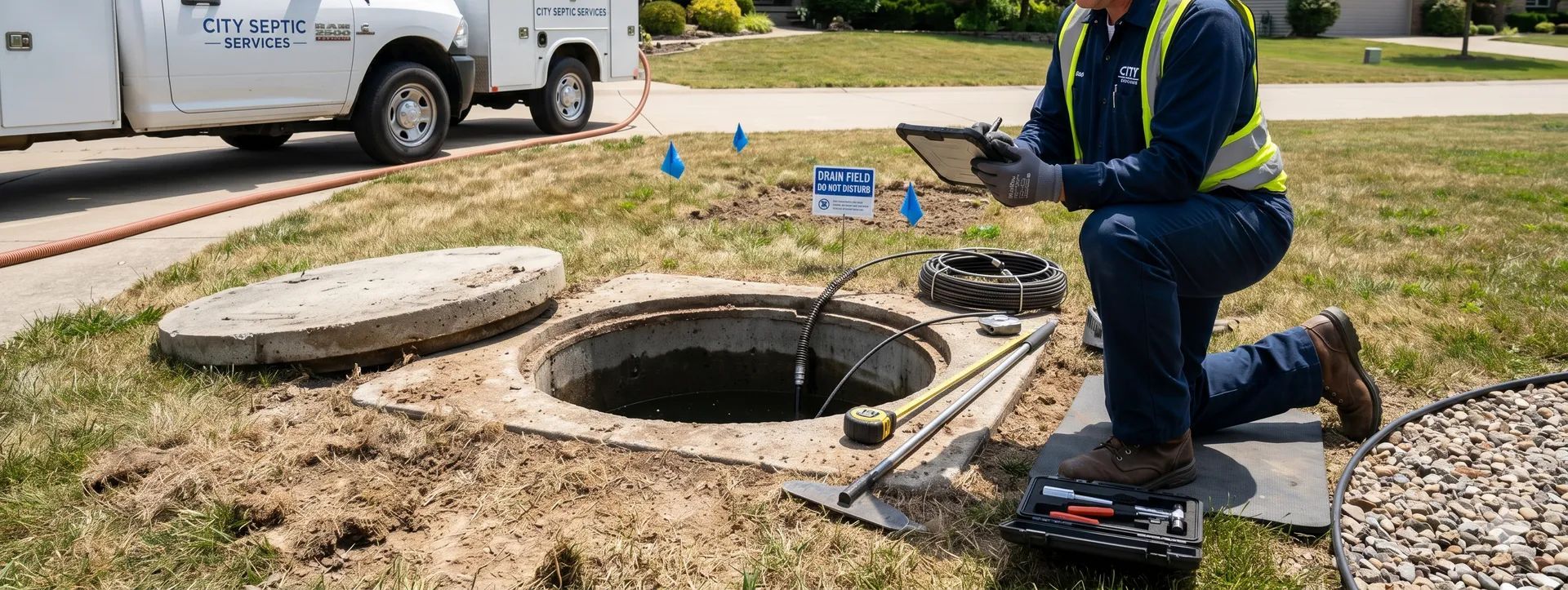
When a Septic Inspection Is Needed Before Selling a Home
Selling a house that runs on a private septic system adds a step that homes on municipal sewer never have to think about. Somewhere between accepting an offer and signing at the closing table, the condition of the tank and leaching field buried in your yard becomes part of the deal. For sellers across the North Shore, where plenty of properties predate town sewer lines and sit on coastal lots with high water tables, that step rewards early attention rather than a last-minute scramble.
This guide covers when an inspection comes into play, what an inspector looks at, how long the results stay good, and your choices if the system does not pass on the first try. None of this is legal advice, and your town can have its own wrinkles, so confirm the details for your address with the people who handle it locally.
Quick Answer: In Massachusetts, a septic system generally needs a Title 5 inspection within two years before the property changes hands, and the system has to pass or conditionally pass before most sales can close. If the system is pumped every year and you keep the records, the inspection can stay valid for three years. Weather delays and certain family transfers follow different rules, so checking the specifics with your local board of health is a smart opening move.
Why Selling Triggers a Septic Inspection
Massachusetts regulates private septic systems under the State Environmental Code, commonly called Title 5, or Title V, and administered by the Department of Environmental Protection. The purpose of a point-of-sale inspection is to confirm that a system can protect public health and the surrounding environment before a new owner takes over. It is the standard process that buyers, lenders, and closing attorneys expect to see documented, and the report has to come from an inspector approved by the state and recognized by your town.
The Two-Year Window
A standard sale is the most common reason an inspection happens. An evaluation completed within two years before the transfer is generally accepted for closing. If your home sells more than once inside that period, a single passing inspection can cover each transfer rather than forcing a fresh one every time.
There is a weather exception built into the process. If conditions in the ground make a proper inspection impossible right before a sale, the evaluation can be completed up to six months afterward, as long as you notify the buyer in writing that the inspection still needs to happen. On coastal and low-lying North Shore lots, saturated soil after a wet stretch or a frozen field in deep winter can be enough to invoke that allowance.
Situations Beyond a Standard Sale
A house sale is not the only event that puts a septic system under review. Other circumstances can call for one:
- Additions and permitted work. Adding a bedroom or making a change that needs a building or occupancy permit can trigger an inspection, partly because more bedrooms usually means more design flow for the system to handle.
- Changes to a building footprint. Any change to where a structure sits prompts a look at the system so that new construction does not land on top of tank components or the reserve area set aside for a future leach field.
- Property splits, combinations, and orders. Dividing a property, merging ownership of adjoining parcels, or an order from MassDEP or the local board of health can each put an inspection on the calendar.
Shared systems, larger systems, and condominiums follow their own schedules. If your situation is anything other than a single-family sale, the board of health is the right place to confirm which clock applies.
TIP: Pull together whatever paperwork you already have before an inspector arrives. Old pumping receipts, a system design or as-built drawing, prior inspection reports, and any repair records help the inspector locate components faster and can support a longer validity window on the results.
A cracked distribution box that has settled out of level is one of the most common findings on inspections in eastern Massachusetts. Soils in coastal communities like Rowley shift with frost and with wet-dry cycles, and a d-box that was perfectly level at installation 20 years ago may be tipped two inches now. That two-inch difference means all the flow is channeling to the low side.
D-Box Issues
When Selling May Not Require an Inspection
Not every transfer sets off the requirement. Title 5 recognizes several situations where a point-of-sale inspection is not part of the picture, and knowing them can save you an unnecessary step.
Transfers of residential property between certain family members are treated differently. Handoffs between current spouses, between parents and their children, and between full siblings generally fall outside the inspection requirement, as do many transfers where the property is held in a trust. Refinancing a mortgage, granting a security interest such as a new mortgage, and changes in the form of ownership that introduce no new parties, including some estate-planning and divorce arrangements, also tend to sit outside the trigger.
These exemptions have precise definitions, and the paperwork matters. Before you assume a transfer is exempt, verify with your board of health or a professional who handles Title 5 work, since an incorrect assumption can stall a closing later.
What the Inspector Actually Checks
An inspection is a condition assessment, not a guarantee of the future. The inspector determines whether the system, as it stands on the day of the visit, can do its job of safely managing wastewater. It does not promise the system will keep performing indefinitely, which is one reason a big jump in household size after a sale deserves its own conversation.
Locating the System
The first task is finding the parts of the system, which on older North Shore homes is not always obvious. The inspector locates and evaluates the septic tank, the distribution box, and any cesspool present, often without heavy excavation, though access covers may need to be uncovered. If a component cannot be located or fully inspected, the inspector has to note on the official form what was checked, what could not be reached, and the reasonable efforts made to complete the work.
Condition of the Core Components
Once the system is exposed, the inspector looks at the pieces that most often show wear:
- The tank. Cracks, corrosion in older metal tanks, and structural weakness all factor into the outcome.
- The distribution box. An uneven or damaged box can send effluent unevenly into the leach field, and it is one of the more frequently flagged parts.
- Pipes and the pump chamber. Broken or obstructed pipes and a malfunctioning pump chamber are noted, since they interrupt the flow the system depends on.
- The soil absorption area. The inspector assesses whether the leaching field or cesspool is handling wastewater or showing signs of backing up to the surface.
The inspector records the findings on a MassDEP-approved form and files it with the local board of health, with a copy going to the buyer. Reports on the wrong form or from an unapproved inspector are not accepted, so confirming your inspector is on the state-approved list protects the transaction.
Pass, Conditional Pass, or Fail
Every inspection lands in one of three categories, and understanding the middle one keeps many sellers from panicking.
A Conditional Pass
A system can earn a conditional pass when a specific component needs repair or replacement but the rest is sound. A cracked or metal septic tank, a broken or obstructed pipe, an uneven distribution box, and a malfunctioning pump chamber are the kinds of issues that can qualify. Once the identified fix is completed and the board of health signs off, typically through a Certificate of Compliance, the system passes. Repairing a distribution box is one of the most common conditional-pass paths.
A Failed System
A soil absorption system or a cesspool that has failed cannot be patched under a conditional pass, and those outcomes point toward a larger upgrade. If a system fails and you decide not to sell, the obligation to correct it does not disappear; a failed system generally needs to be upgraded within two years unless the board of health or MassDEP approves a different schedule.
Sellers usually handle a failed system one of two ways. The repair can be completed before closing with a full sign-off, which many buyers and lenders prefer, or the parties can agree to an escrow holdback so the work happens after closing. Not every lender allows a holdback, so this is a point to work out with your agent and closing attorney early.
WARNING: An inspector certifies the system only as of the inspection date, and results do not carry over to a new home you buy. If you are moving to another North Shore property with its own septic system, budget time for a separate inspection there. Assuming a recent report on your current house says anything about your next one is a mistake that surfaces at the worst moment.
How Long the Results Stay Valid
Timing is where sellers gain or lose flexibility. A point-of-sale inspection is generally good for two years. That window stretches to three years when the system is pumped once a year and the inspection report includes records proving the annual pumping happened. For a seller who inspects early, keeping up with yearly pumping is a low-effort way to protect the value of a passing report while the house is on the market.
A brand-new or recently upgraded system works a little differently. Rather than a point-of-sale inspection, it carries a Certificate of Compliance from the board of health, which exempts it from the inspection requirement for transfers within two years, extendable toward three years with pumping records. If your system was replaced not long ago, dig out that certificate before scheduling anything.
What Sellers Should Do First
Getting ahead of the process gives you room to plan instead of react. A few early moves make the biggest difference:
· Confirm your situation with the board of health
A quick check clarifies whether your sale triggers an inspection, whether an exemption applies, and any local specifics your town layers on top of the state process.
· Find a state-approved inspector
Only inspectors approved by MassDEP and recognized by your town produce valid
reports, so verify that before booking.
· Schedule early in your timeline
Inspecting well before you list gives you time to address a conditional pass or plan an
upgrade without derailing a closing date, and older coastal-lot systems in particular can
surprise their owners.
Handled with a little lead time, the septic step becomes a manageable part of selling rather than a roadblock. The sellers who fare best treat the inspection as an early item on the list, not a hurdle found during the final walkthrough.
Frequently Asked Questions
Do I need a passing inspection before I can close on my home?
In most standard sales, yes. A Title 5 inspection within the two-year window generally needs a pass or conditional pass before closing. Your closing attorney can confirm exactly what's required.
How far ahead of listing should I have the system inspected?
Earlier is better. A report stays valid two years, up to three with pumping records, so inspecting before listing gives time to handle repairs without pressure on your closing date.
What happens if the weather makes an inspection impossible right before my sale?
Massachusetts allows completion up to six months after the sale when conditions prevent it beforehand, provided you notify the buyer in writing. Saturated or frozen soil makes this relevant in winter.
Does an older cesspool automatically fail?
Not automatically. A cesspool faces a tougher standard but doesn't fail on age alone. Hydraulic failure, proximity to a water supply, or environmental threat are what push it toward an upgrade.
Get Ahead of Your Septic Inspection Early
Selling a home on the North Shore goes more smoothly when the septic question is answered early. Confirming your requirements with the board of health, finding a state-approved inspector, and scheduling well before you list gives you room to handle a conditional pass or plan a repair without pressure on your closing date. The sellers who fare best treat the inspection as an early item on the checklist, not a surprise found during the final walkthrough.
With 11+ years serving Rowley, Massachusetts, and the surrounding communities, Down East Title V Inspections
helps sellers schedule a clear, dependable Title 5 evaluation and understand exactly what the results mean for their sale. From locating older tanks on coastal lots to explaining a conditional pass, our team takes the guesswork out of the process. Reach out to schedule your
inspection
and move toward the closing table with confidence.