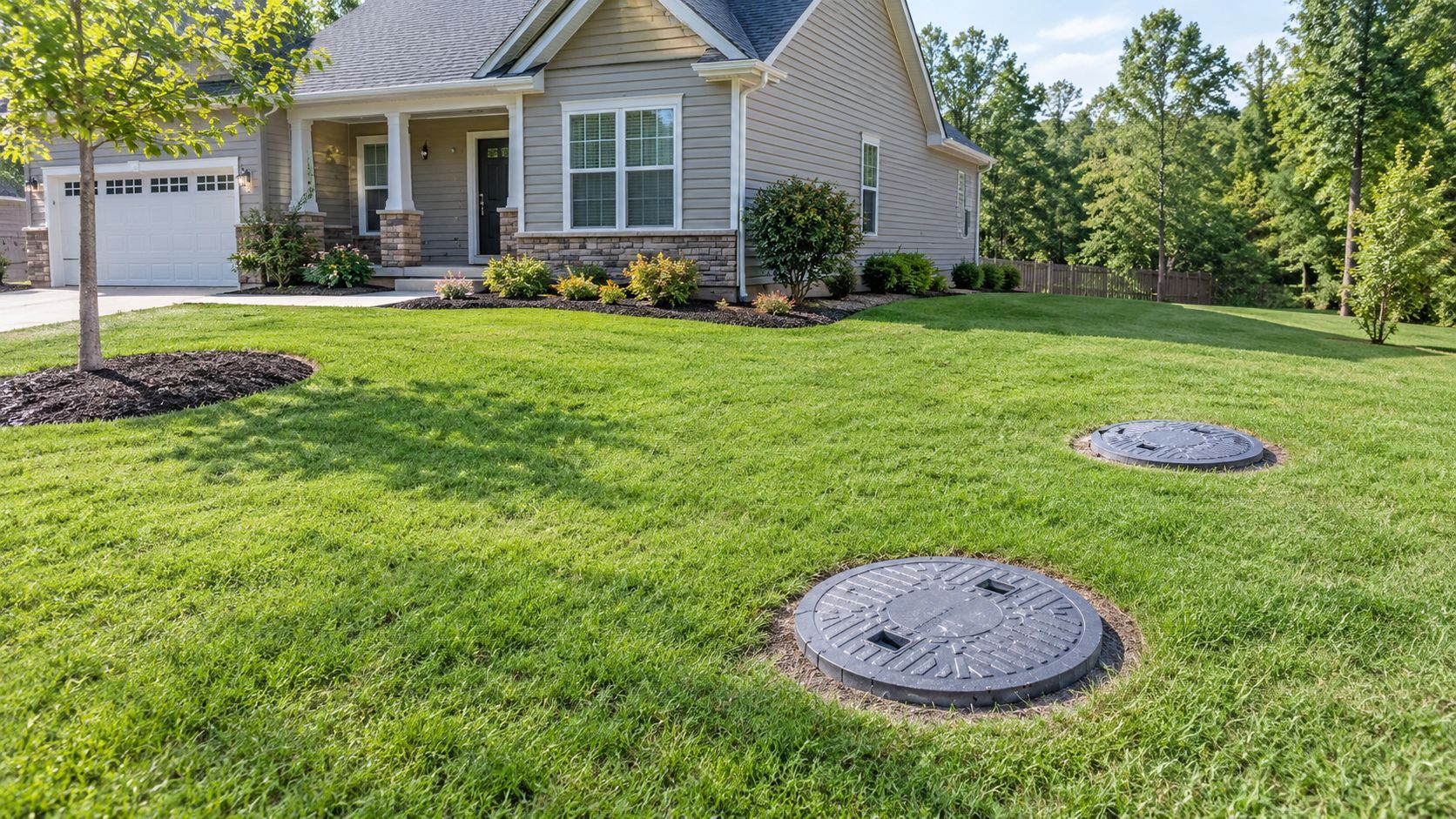
Wondering What a Title V Septic Inspector Actually Checks? Here Is the Full Breakdown
Quick Answer: A Title V septic inspection looks at every accessible part of your system, starting with the septic tank and working through the distribution box, the connecting pipes, and the soil absorption area where wastewater finally gets treated. Your inspector checks tank material and condition, sludge and scum levels, signs of leaking or backup, whether the distribution box sits level and splits flow evenly, and whether the leach field or cesspool shows signs of trouble. Groundwater depth gets measured too, since a leach field sitting too close to the water table is one of the most common reasons a system doesn't pass. You'll end up with one of four outcomes: a pass, a conditional pass, a fail, or a note that your local board of health needs to weigh in.
You probably picture a
septic inspection as someone glancing at a tank lid and signing a form. It's a lot more involved than that. Knowing what an inspector actually does while standing on your property makes the report you get afterward much easier to read. This guide walks through each part of the system, what your inspector is looking for at every stage, and why conditions like a high water table or an older cesspool get extra scrutiny around Rowley, Ipswich, and the rest of the coastal North Shore.
Locating Every Component Before Anything Gets Evaluated
Before an inspector can assess anything, they have to find it. On newer construction, that's usually simple, since a design plan already exists somewhere. Older North Shore homes are a different story. Properties that predate town record-keeping, or that changed hands a few times without updated paperwork, can take real effort to map out. Inspectors typically start with a records search at the local board of health, then move to non-invasive methods like probing the ground or tracing pipe direction from where plumbing exits the foundation.
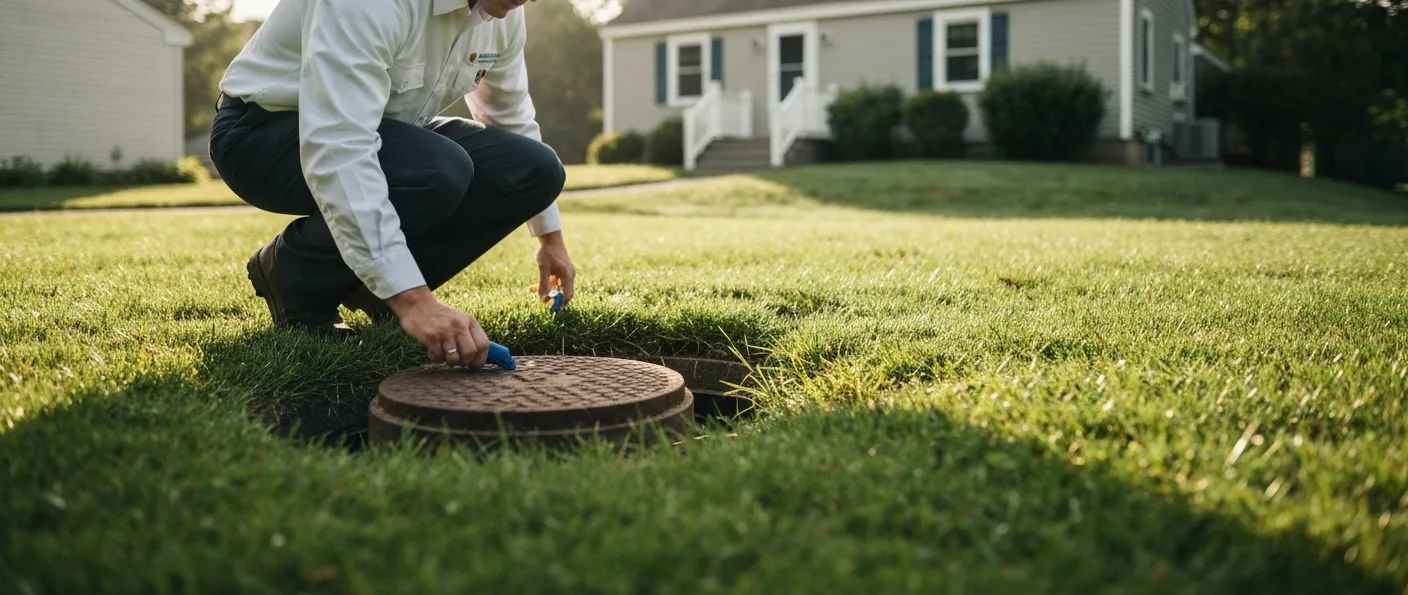
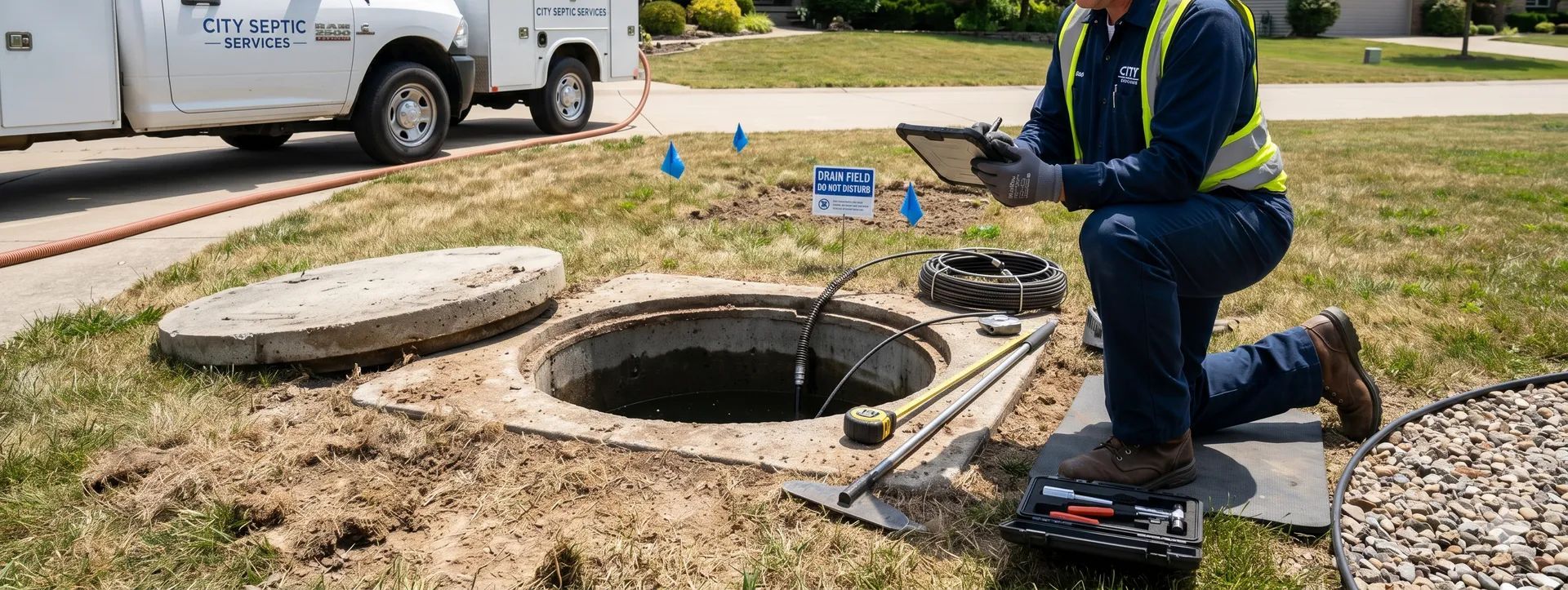
Every manhole, cover, and cleanout tied to the system has to be exposed for a complete inspection. If a component can't be located after a reasonable effort, the inspector writes down what was checked, what couldn't be reached, and what steps they took trying. That paper trail matters. An incomplete inspection can leave a sale or a refinance stuck in limbo until the missing pieces get sorted out.
TIP: Dig up any paperwork you have on your system before the inspector shows up, even an old sketch from a previous owner or a receipt from a pumping company. Locating buried components on an older coastal lot can eat up hours of a visit, and a rough diagram saves real time.
A cracked distribution box that has settled out of level is one of the most common findings on inspections in eastern Massachusetts. Soils in coastal communities like Rowley shift with frost and with wet-dry cycles, and a d-box that was perfectly level at installation 20 years ago may be tipped two inches now. That two-inch difference means all the flow is channeling to the low side.
D-Box Issues
Inside the Septic Tank
Once the tank is exposed, the real work starts. Your inspector checks what the tank is built from, since older metal tanks corrode a lot faster than concrete or fiberglass ones. They measure sludge and scum thickness to gauge how much solid material has built up and whether the tank needs pumping. They also look closely at the inlet and outlet baffles or tees. A broken baffle lets solids slip past the tank and into the distribution box, and from there straight into the leach field, where they cause far bigger problems.
Liquid levels inside the tank tell their own story. A level that sits too low can mean the tank is leaking into the surrounding soil. One that sits too high with no outflow usually points to a blockage downstream, or a distribution box that's backed up. Your inspector investigates either condition and notes whether the cause looks like a quick fix or a sign of something bigger happening in the leach field.
The Distribution Box and How Flow Moves Through the System
Wastewater leaves the tank and flows into a distribution box, whose job is to split that flow evenly among the pipes running out to the leach field. Inspectors check whether the box sits level. A tilted or settled box sends more flow to one section of the field than another, and that section wears out faster than the rest. They also look for solids carrying over into the box, which tells them the tank isn't settling waste the way it should before sending it downstream.
Some systems use a pump chamber instead of a gravity-fed box. In that case, the inspector confirms the pump is cycling correctly. A dead pump or a siphon that's stopped working is usually a quick repair or swap, nothing close to the work involved in fixing a leach field.
The Soil Absorption Area and Groundwater Depth
This is where most of the real evaluation happens, and where North Shore properties run into conditions inland systems rarely face. The soil absorption area, often called the leach field, is where partially treated wastewater finally seeps into the ground for its last round of natural filtering. Inspectors look for surface ponding, unusually lush or dark green grass growing over the field, and any sign that effluent has broken out to the surface. They check the soil itself too, watching for clogging that would keep it from absorbing water the way it's supposed to.
The other big factor is how close the bottom of the leach field sits to the seasonal high groundwater elevation. This single measurement causes more failed inspections than almost anything else, because treatment depends on wastewater passing through a certain depth of unsaturated soil before it ever reaches groundwater. Coastal towns like Rowley, Ipswich, Essex, and Newburyport deal with tidally influenced groundwater that behaves differently than it does inland, and older systems built before current setback rules sometimes sit closer to that water table than would be allowed today. To pin down where that high water mark actually falls, inspectors combine site observation, local groundwater records, and, sometimes, a test hole.
Older homes on smaller coastal lots run into another wrinkle. Current standards call for real separation between a leach field and any nearby drinking water well, generally somewhere around 100 feet for a soil absorption system and 50 feet for a septic tank, though the exact figure depends on the specific setback category involved. A system installed decades ago on a tight lot may predate those standards entirely. That's one reason older North Shore properties sometimes need a closer look before a sale can move forward.
Cesspools and Older System Types
Plenty of homes across Essex County, especially older ones, still rely on cesspools instead of a conventional tank-and-leach-field setup. Cesspools get judged against a different set of standards. Inspectors measure their dimensions, check liquid levels, and figure out how far the bottom of the cesspool sits above the seasonal high groundwater elevation. Distance to nearby wetlands, surface water, and drinking water sources matters here too, since a cesspool by design leaches effluent straight into the surrounding soil without the treatment steps a tank and distribution box provide.
Some properties run what's known as an overflow cesspool system, where an initial cesspool acts something like a septic tank and then overflows into a second leaching component. These hybrid setups get evaluated against both cesspool and conventional standards at once, which makes them one of the more involved inspections to get right.
Why the Results Land in Different Categories
An inspection doesn't just land on pass or fail. A system earns a conditional pass when it has one specific, fixable problem, a corroding metal tank, a broken baffle, an uneven distribution box, while everything else checks out fine. Fix that one thing, get it confirmed, and the system moves to a full pass. A failing result usually points to the soil absorption area itself, since a clogged or undersized leach field can't be patched the way a tank or pipe issue can. And in some situations, particularly a cesspool sitting near a wetland or water supply, the inspector can't make a final call at all. The file goes to the local board of health for a decision instead.
WARNING: A passing inspection only reflects your system's condition on the day it was tested, not a promise about the future. Heavy household use, a sudden jump in occupants, or skipping routine pumping after a passing inspection can push a healthy system toward failure well before the report's usual validity window runs out.
Getting Ready for the Visit
A little prep makes the inspection go faster and gives your inspector better information to work with. If you know where your access points are, expose them ahead of time. Digging through a recently pumped tank and freshly opened boxes beats a first-time excavation every time. Skip the heavy water use in the days beforehand, too. A weekend of laundry marathons or a house full of guests can temporarily raise liquid levels and muddy the read on how the system normally performs. Got a recent pumping receipt? Keep it handy. Pumping records back up the inspector's read on sludge accumulation and can affect how long a passing result stays valid.
Know your property has an older cesspool, a metal tank, or sits close to wetlands or a private well? Say so before the inspection starts. That context helps your inspector plan the visit and cuts down on surprises once the covers come off.
Frequently Asked Questions
Does the inspector dig up my whole yard to inspect the leach field?
No. Excavating the soil absorption area is generally reserved for cases where other signs, like surface ponding or a backed-up distribution box, point toward a possible failure there. Most of the leach field assessment relies on surface observation, groundwater measurement, and tracing the system layout without much digging at all.
How does an inspector find a system with no paperwork or design plans?
They start with whatever records the local board of health has on file, then move to probing the ground, tracing pipe direction from the foundation, and reading the topography for clues about drainage patterns. It takes longer without records, but a thorough inspector can usually still get the job done.
Why does groundwater depth matter so much to the outcome?
Wastewater needs a certain depth of unsaturated soil to filter properly before it reaches the water table. If the bottom of the leach field sits too close to the seasonal high groundwater level, that filtering doesn't have room to happen. That's why groundwater depth gets such close attention on coastal and low-lying properties.
Is a cesspool automatically going to fail inspection?
No. A cesspool gets judged on its own set of standards involving distance to groundwater, wetlands, and water supplies, along with its physical condition. Plenty of cesspools pass or conditionally pass depending on those specific site factors, not because of age or design alone.
Understanding Your Septic System Beyond Inspection
A Title V inspection provides a detailed snapshot of how a septic system is performing at a specific point in time, but it also helps homeowners better understand the condition of every major component beneath their property. Knowing how the tank, distribution system, and soil absorption area work together makes it easier to recognize the importance of routine maintenance, timely pumping, and protecting the system from unnecessary strain. For many North Shore properties, this knowledge becomes just as valuable as the inspection report itself.
With 11+ years of experience, Down East Title V Inspections
has evaluated septic systems across Rowley, MA, helping homeowners understand the unique conditions that affect coastal properties without unnecessary confusion. Whether a property contains a conventional septic system or an older cesspool, a thorough inspection provides useful insight into its current condition and any areas that deserve future attention. Understanding the findings today helps support informed decisions and responsible septic system care for years to come.